 English
  Tiếng Việt
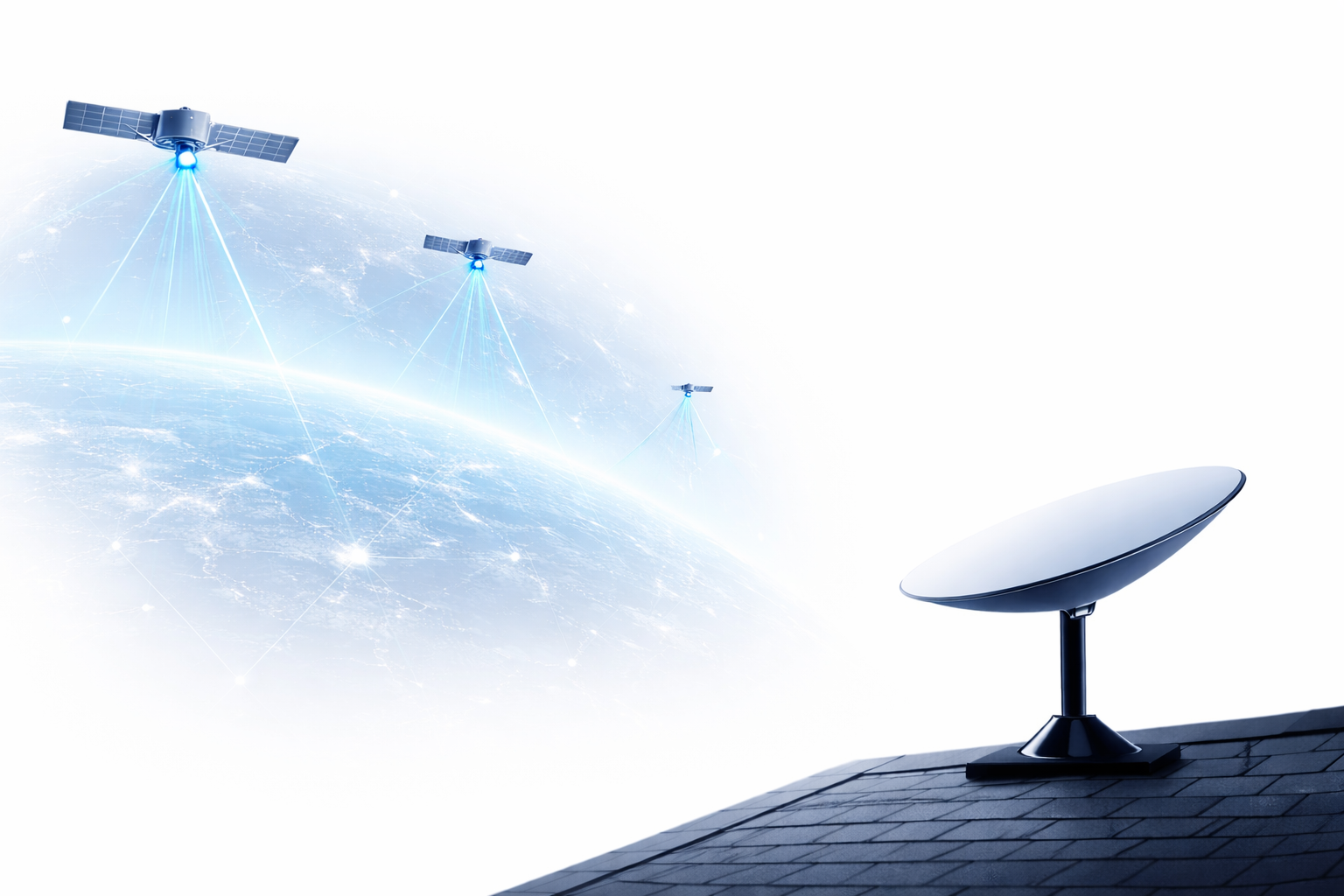
Starlink, SpaceX's satellite Internet project, is revolutionizing the global telecommunications industry with the ambition to provide high-speed Internet coverage to every corner of the Earth. By 2030, Starlink will not only reshape connectivity but also usher in a new era for smart agriculture, smart cities, and space technology applications. The article provides a detailed analysis of the development plan, technological breakthroughs, and challenges that Starlink must overcome in the next decade.
1. Expanding the Satellite Constellation: The Foundation for Global Coverage
1.1. Doubling the Number of Satellites
As of September 2024, Starlink has launched 7,000 satellites into low Earth orbit (LEO), accounting for 60% of the total active satellites globally. According to the plan, by 2030, SpaceX will expand the constellation to 34,400 Gen2 satellites integrating cross-link laser technology and phased array antennas for speeds of 100 Gbps/satellite . Each Gen2 satellite has a mass of 1,250 kg, operating at an altitude of 340–614 km, helping to reduce latency to 20–35 ms and increase interference resistance .
1.2. Solving the Space Debris Problem
With 34,400 Gen2 satellites expected, Starlink accounts for 75% of total artificial objects in orbit. To reduce space debris, SpaceX is developing technology for self-destruct with plasma, reducing the decay time from 5 years to 6 months . Additionally, Gen2 satellites are equipped with an automatic collision avoidance system, using AI to predict safe orbits.
2. Breakthrough Technology: From Direct to Cell to Space IoT
2.1. Direct to Cell: Borderless Connectivity
The service Direct to Cell allows regular 4G/5G phones to receive messages, make emergency calls via satellite without special hardware. As of February 2025, 400 satellites have supported this feature, with global coverage expected by 2027 . In the US, T-Mobile is deploying the service for 5 million subscribers in the Appalachian region, while New Zealand applies for fishermen in the Tasman Sea .
2.2. Space IoT: Solutions for Agriculture and Logistics
Starlink Gen2 supports CAT-1/CAT-4 IoT, opening up multi-sector applications:
-
Smart agriculture: Monitoring soil moisture in drought-prone areas of Africa.
-
Logistics: Tracking maritime containers across the Pacific Ocean.
-
Energy: Managing offshore wind turbines in the North Sea .
3. Chiến Lược Thị Trường: Châu Á Là “Mảnh Đất Vàng”
3.1. Vietnam: Pilot 600,000 Subscribers
According to Decision 659/QĐ-TTg, Starlink is licensed for a pilot in Vietnam until 2030 with 600,000 subscribers and 15 Gateway stations, starting from Da Nang in June/2025 .Expected subscription price1.2–2.5 million VND/month, focusing on17% of communes without fiber opticand specific industries such as maritime, oil and gas.
3.2. South Korea And Japan: Competing With 5G/6G
-
South Korea:SK Telecom integrates Starlink into Busan smart city, providing Internet speed150 Mbpsfor airplanes.
-
Japan:KDDI tests Starlink as a backbone for the 6G network serving the 2030 Olympics.
4. Fierce Competition: New Power Map
| Criteria | Starlink | Project Kuiper (Amazon) | OneWeb | SpaceSail (China) |
|---|---|---|---|---|
| Number of satellites (2025) | 7.100 | 3.236 | 648 | 648 |
| Maximum speed | 1 Gbps | 400 Mbps | 195 Mbps | 500 Mbps |
| Latency | 20–40 ms | 30–50 ms | 70–150 ms | 25–45 ms |
| Device price | 12–15 million VND | 9–12 million VND | 18–22 million VND | 10–14 million VND |
| Key markets | Dân dụng & DN vừa | DN lớn & Chính phủ | Hàng không & Hải quân | Global (priority ASEAN) |
Source: Compiled from Speedtest 2025 report and SpaceX.
4.1. Pressure From China And Amazon
-
SpaceSail (China): Plan to deploy 15,000 satellites by 2030, focusing on ASEAN with equipment prices cheaper by 20% compared to Starlink .
-
Amazon Kuiper: Investment of 10 billion USD to launch 3,236 satellites, targeting the large enterprise market .
5. Major Challenges: From Finance to Environment
5.1. Financial Burden
-
Operating costs 2025: 10 billion USD/year, expected to increase to 15 billion USD by 2030 .
-
Projected profit: 16 billion USD by 2030, mainly from package Business (500 USD/month) and Direct to Cell .
5.2. Environmental Impact
The launch of thousands of satellites increases the risk of light pollution and space collisions. SpaceX is collaborating with NASA to develop a space debris scanning system using lasers .
6. Forecast to 2030: Borderless Internet
6.1. Global Target
-
20 million subscribers in 100 countries, accounting for 30% of the satellite Internet market .
-
Integrating AI network managementto optimize bandwidth in real-time.
6.2. Potential Applications
-
Telemedicine:Satellite robotic surgery for remote areas.
-
Education:8K virtual classrooms for island students.
-
Smart City:IoT infrastructure for50 smart citiesin Asia.
Kết Luận: Starlink – Cánh Cửa Vào Kỷ Nguyên Số Toàn Cầu
By 2030, Starlink will not only be the leading satellite Internet provider but also become the backbone of the digital economy. However, success depends on the ability to address challenges related tofinance, environment and competition. Với việc triển khai tại Việt Nam và các thị trường mới nổi, Starlink đang chứng minh sứ mệnh “kết nối không biên giới” – nơi mọi người dân, dù ở vùng sâu hay hải đảo, đều có quyền truy cập tri thức và cơ hội phát triển.