 English
  Tiếng Việt
1. Overview Introduction
Currently, broadband Internet is still not well-known to global users. However, with the development of technology, users now have many options for Internet connection. Two of the most popular choices are Fiber Optic Internet and Starlink Satellite Internet. Each of these types has its own advantages and disadvantages, serving different needs. This article will analyze 8 important differences between Starlink and Fiber Optic Internet, helping you choose the service that suits your usage needs.
2. Connection Technology
2.1 Fiber Optic Internet
Fiber optic Internet uses optical fiber cables (fiber optics) to transmit signals. Fiber optics transmit light instead of electrical signals, allowing data to be transmitted at extremely fast and stable speeds.
2.2 Starlink Satellite Internet
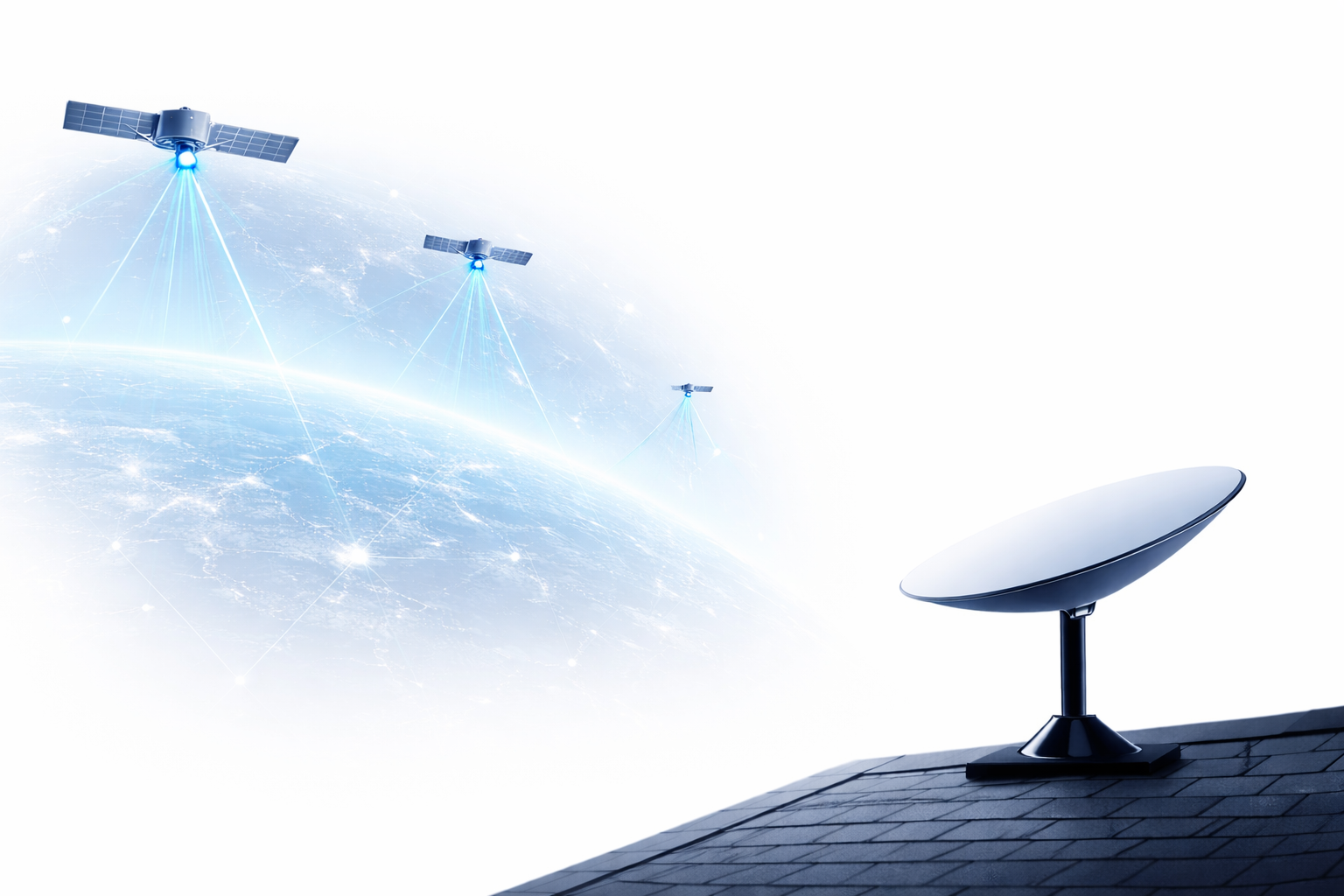
Starlink uses a network system of satellites, along with small bay satellites in low Earth orbit (LEO). This direct connection is protected with user devices through a Starlink transmitter, helping to provide high-speed Internet service.
3. Internet Speed
3.1 Fiber Optic Internet Speed
Fiber optic Internet has very fast download and upload speeds, ranging from 100 Mbps to 10 Gbps depending on the service package and provider. Fiber optics is one of the fastest transmission technologies available today.
3.2 Starlink Internet Speed
Although Starlink's Internet speed is continuously improving, with current speeds ranging from 100 Mbps to 300 Mbps, it is still slower than fiber optics. However, Starlink can provide high and low speeds in areas without fiber optic infrastructure.
4. Latency
4.1 Fiber Optic Internet Latency
Fiber optics have low latency, typically only 1-5 ms. This is why fiber optic Internet is popular for applications requiring low latency, such as online gaming and video conferencing.
4.2 Starlink Internet Latency
With high-level LEO operations, Starlink has latency ranging from 20-40 ms, much lower than geostationary satellites (GEO). However, this latency is still higher than fiber optics.
5. Coverage Area
5.1 Fiber Optic Internet Coverage Area
Fiber optics require ground-based cable infrastructure, so there is no limited coverage mode. Most urban and metropolitan areas can connect to fiber optics, but in rural or remote areas, development is costly and challenging.

5.2 Starlink Coverage Area
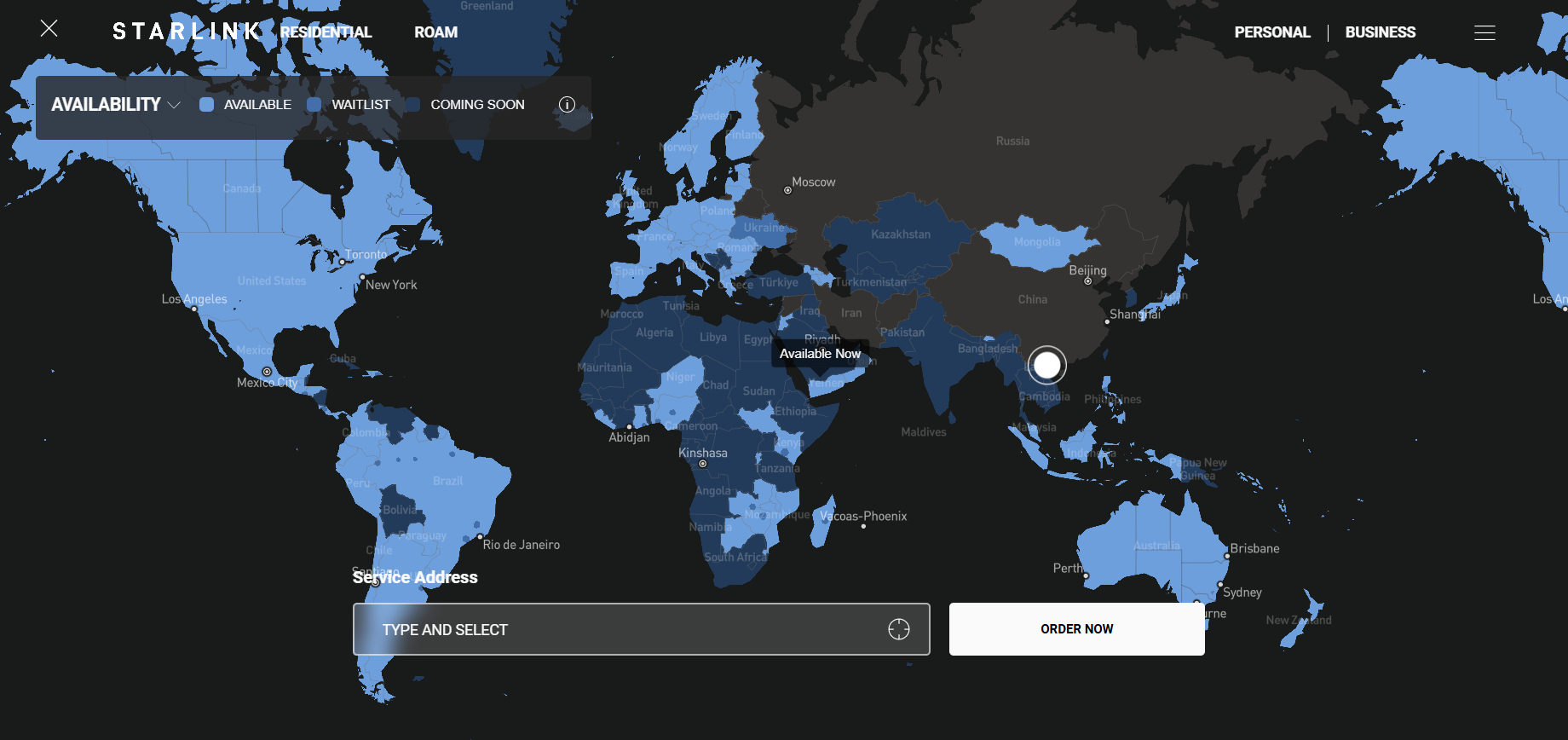
One of Starlink's outstanding advantages is its ability to provide coverage anywhere on Earth, including remote areas, rural regions, islands, and polar regions. This is an ideal choice for places without fiber optic Internet infrastructure.
6. Installation and Setup
6.1 Fiber Optic Installation
Installing fiber optic Internet requires running cables from the provider's transmission station to the user's home. This process can take from several days to several weeks, especially in suburban or rural areas.
6.2 Starlink Installation
Starlink installation is simpler; users only need the Starlink receiver and connect it to the home Wi-Fi router. The installation can be easily done in a few steps following the provider's instructions, and the service will be ready to operate as soon as the equipment is connected.
7. Costs and Pricing
7.1 Fiber Optic Costs
Fiber optic Internet often has a relatively high initial investment cost, especially for mounting equipment and pulling cables. However, the monthly cost is usually cheaper compared to Starlink. Fiber optic costs can range from 30 to 150 USD/month, depending on the service package and provider.
7.2 Starlink Costs
Starlink has a relatively high installation cost (about 499 USD for the Starlink transceiver), and the monthly fee ranges from 99 USD to 110 USD. Although the cost is slightly higher, Starlink remains the only choice for people in areas without fiber optic Internet infrastructure.
8. Applications and Functionality
8.1 Fiber Optic Internet
Fiber optic is suitable for large urban areas and densely populated places where network infrastructure is already available. It is the ideal solution for those who need fast speeds, high stability, and uninterrupted service.
8.2 Starlink
Starlink is suitable for remote areas, far-flung regions where Internet transmission services cannot develop. With Starlink, users can connect to the Internet from anywhere in the world, from rural areas to extremely hard-to-reach locations.
9. Comparison Table: Starlink vs. Fiber Optic Internet
| Criteria | Starlink | Fiber Optic Internet |
|---|---|---|
| Connection Technology | Satellite (Starlink LEO) | Fiber optic cable |
| Internet speed | 100-300 Mbps (can be higher) | Optional package service 100 Mbps – 10 Gbps |
| Latency | 20-40 seconds | 1-5 ms (very low) |
| Coverage area | Global coverage including escape areas, polar regions | Coverage mainly in areas with fiber optic infrastructure |
| Cost | 99-110 USD/month (high initial investment) | 30-150 USD/month (Usually lower than Starlink) |
| Settings | Easy, device only needs to emit Starlink and Wi-Fi | Requires fiber optic installation and long time commitment |
| Suitable for | Escape areas, no fiber optic network layer | Urban areas and cities with available lower layers |
| Common applications | Remote areas, islands, polar regions, mobile applications | Urban areas, applications requiring stable speed |
10. Conclusion
Fiber Optic Internet and Starlink each have their own priority modes and separate limits, and the choice between these two services depends on the user's needs and geographical location. If you live in a city or area with available network infrastructure, Fiber optic will be a more economical and stable choice. However, if you are in remote areas or need a flexible solution, Starlink is a great choice, providing high-speed Internet anywhere, regardless of geography.