 English
  Tiếng Việt
 1. Introduction to the Starlink protection network
Starlink is a global Internet protection network system developed by SpaceX, aimed at providing high-speed, low-latency Internet service to users worldwide, especially in remote areas, islands, and polar regions where internet communication infrastructure is difficult to develop.
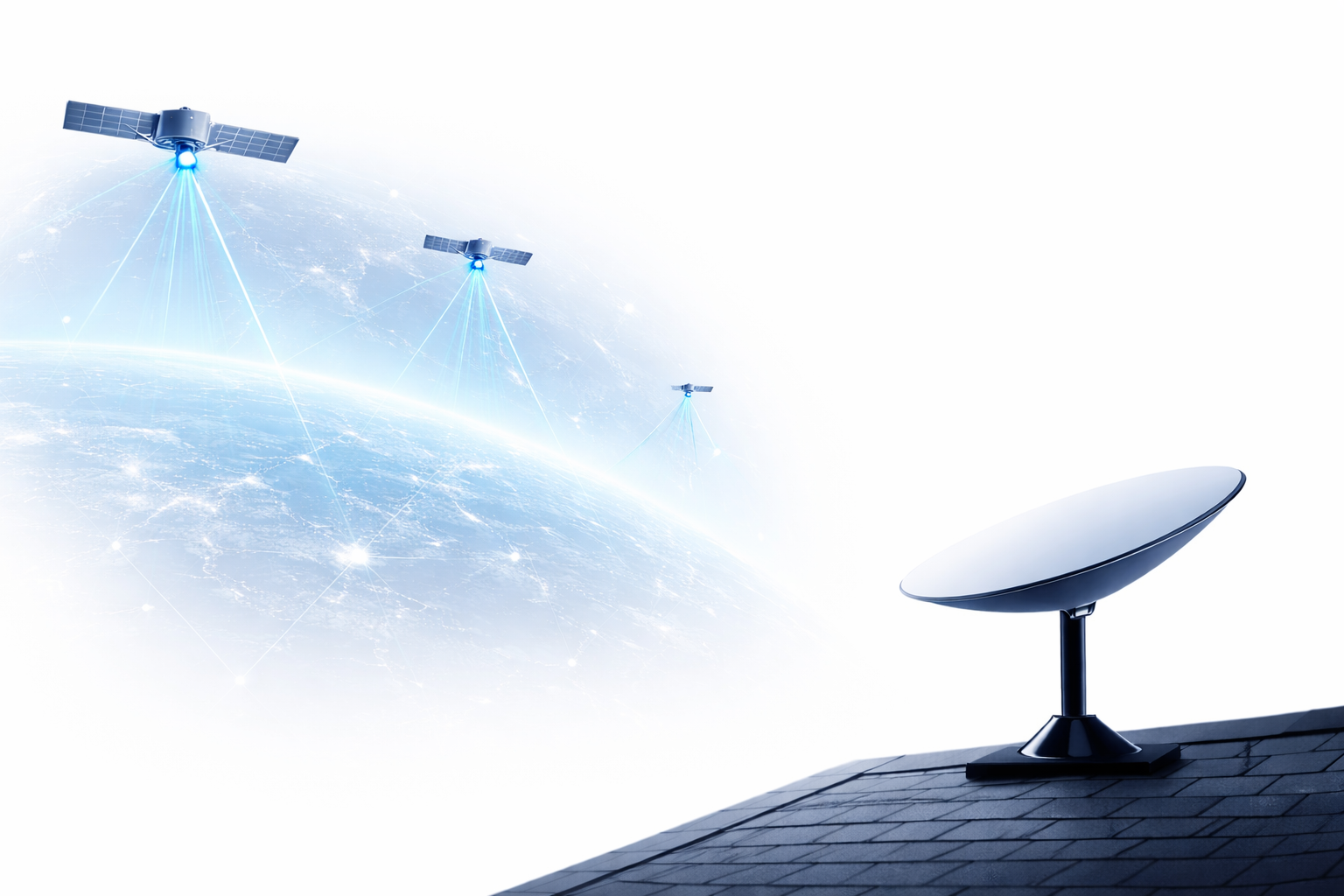
The Starlink protection network is based on a constellation of small satellites operating in low Earth orbit (LEO), with the capability of global coverage. The number of satellites and their positioning are key factors that ultimately determine the quality of service and wide coverage area.

2. Current status and development plans for Starlink satellite numbers
2.1 Number of satellites launched
As of May 2025, SpaceX has successfully launched over 5,000 Starlink satellites into LEO. This is a protected internet number, far exceeding the transmission capacity of other protection networks.
2.2 General objectives
SpaceX has been licensed by the U.S. Federal Communications Commission (FCC) to launch up to 42,000 satellites for the Starlink project, potentially realizing the ambition to build the largest satellite protection network on the planet, meeting connectivity needs anytime, anywhere.
2.3 New generation satellites
-
Starlink generation 2 with many improvements such as multi-channel optical laser links, improved phased array antennas to increase bandwidth and stable speed.
-
The new generation satellites are more compact, energy-efficient, have a longer lifespan, contributing to reduced operational costs.
3. Satellite distribution positions in low Earth orbit
3.1 LEO orbit – Advantages and characteristics
Starlink operates in low Earth orbit (LEO), from 340 km to 1,200 km above the ground, allowing signal latency to be reduced to 20–40 ms, nearly matching fiber optic network speeds.
3.2 Orbital rings and inclination
-
The protective network is distributed across multiple orbital planes with inclinations ranging from 53° to 97.6°, covering all geographical areas from the equator to the poles.
-
The high inclination allows the satellites to pass over the North and South Poles, meeting connectivity needs in special areas.
3.3 Position management and collision avoidance
Each satellite is equipped with a propulsion system to accurately adjust its position, maintain a safe distance from other satellites, and minimize the risk of space collisions.
4. Starlink technology support network
4.1 Optical inter-satellite laser links
-
Facilitates direct data transmission between satellites without returning to ground stations, reducing latency and increasing network bandwidth.
-
The laser link network creates a successful network 'mesh', optimizing transmission paths and improving reliability.
4.2 Network information coordination system
-
Utilizes artificial intelligence (AI) and machine learning to optimize data traffic, automatically adjusting in case of network or transmission issues.
-
Real-time network management software ensures service quality and system availability.
4.3 User device
-
The compact Starlink transceiver uses a phased array antenna capable of automatically searching for and tracking satellites in the sky, making it easy for users to install and use.
-
The device is well-suited for both urban and remote areas where fiber optic infrastructure is unavailable.
5. Impact of satellite quantity and distribution on service quality

5.1 Speed and latency
-
A dense satellite network reduces the signal distance required for transmission, improving download speeds up to 300 Mbps and latency to just 20-40 ms.
-
The low latency is particularly suitable for applications requiring quick response times, such as online gaming and video conferencing.
5.2 Global coverage
-
Additional satellite distributions across multiple orbital planes with different inclinations ensure coverage of nearly the entire Earth's surface.
-
Rural areas, islands, polar regions, and remote areas are all connected.
5.3 Backup capability and stability
-
The multi-channel link system and automatic coordination software reroute signals during protection or link failures, ensuring continuous network operation.
6. Challenges in managing large modular network protection
6.1 Space debris management
-
The relaxation of satellite protection creates significant pressure in controlling space debris and avoiding collisions, requiring technical solutions and international policies.
6.2 Coordination of spectrum and legal issues
-
International coordination is needed to manage spectrum effects, avoid signal interference with other telecommunications systems, and ensure continuous operation.
6.3 Information security
-
With large-scale network models, advanced security measures must be applied to protect user data and systems from security network bases.
7. Future prospects of the Starlink network
-
Upgrading new generation satellites with more advanced antenna and optical laser technology.
-
Expanding coverage to unconnected areas and enhancing stability in polar regions and islands.
-
Integrating satellite networks with new generation telecommunications technologies such as 5G, IoT.
8. Conclusion
The Starlink protection network, with a large number of satellites and reasonable land-based deployment, has been networking global Internet provision. Optical laser link technology, multi-layer networks, and information management systems help Starlink expand coverage, improve service quality, bridge the global gap, and contribute to socio-economic development.