 English
  Tiếng Việt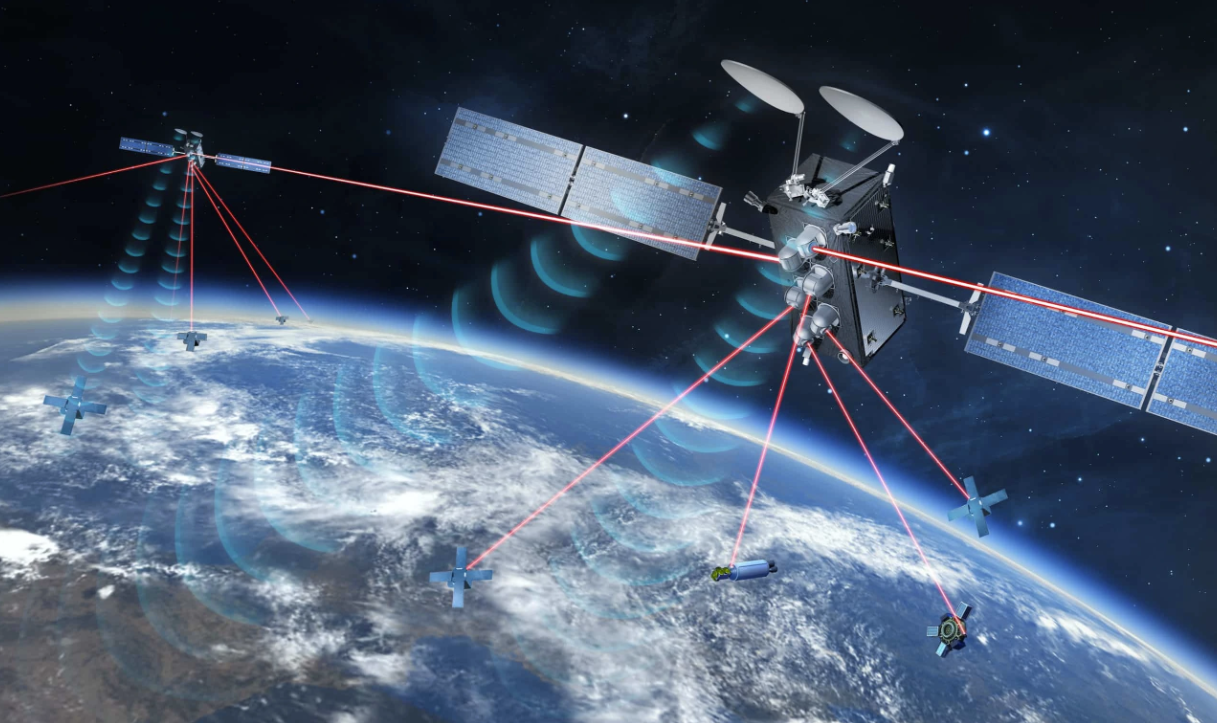
1. Introduction to Starlink and project goals
Starlink is an internet satellite network developed by SpaceX, with the ambition to provide high-speed, low-latency internet coverage globally, especially in remote areas lacking fiber optic infrastructure. The project aims to bridge the digital divide and expand internet access for everyone.
Starlink uses thousands of small satellites operating in low Earth orbit (LEO), forming a continuous network capable of transmitting internet data with higher speed and stability compared to traditional satellites.
2. Satellite orbit and network structure
2.1 Satellites in low Earth orbit (LEO)
-
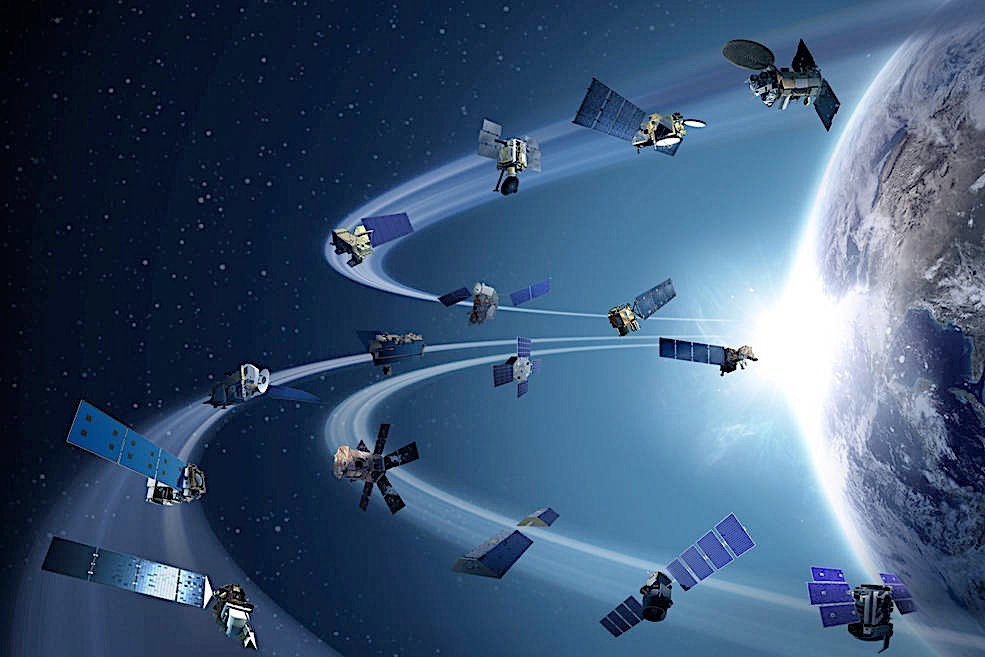
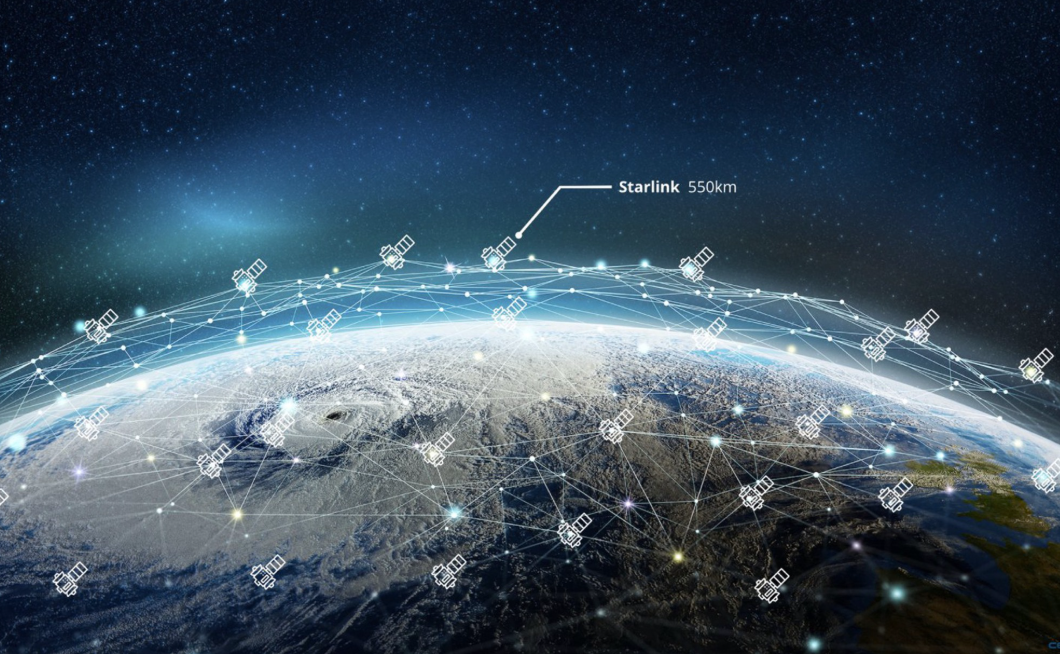
Starlink satellites operate in LEO orbit from approximately 340 km to 1,200 km, much lower than geostationary satellites (GEO) at about 36,000 km.
-
Placing satellites closer to Earth helps reduce signal latency, thereby enhancing the internet experience for users.
2.2 Satellite network system
-
Starlink plans to launch about 12,000 satellites in the initial phase, with plans to expand to over 40,000 satellites.
-
The satellites are arranged in synchronized orbital rings, forming a tightly linked mesh network.
-
Each satellite can transmit data directly via laser links to adjacent satellites, optimizing speed and minimizing reliance on ground stations.
2.3 Ground Stations
-
Ground stations connect the satellite network with the global internet system.
-
Ground stations are strategically located, with fast and stable fiber optic connections.
-
They play an intermediary role in transmitting data between the internet network and satellites, ensuring continuous connectivity for users.
3. Operating principles of the Starlink system
3.1 Connection from users to satellites
-
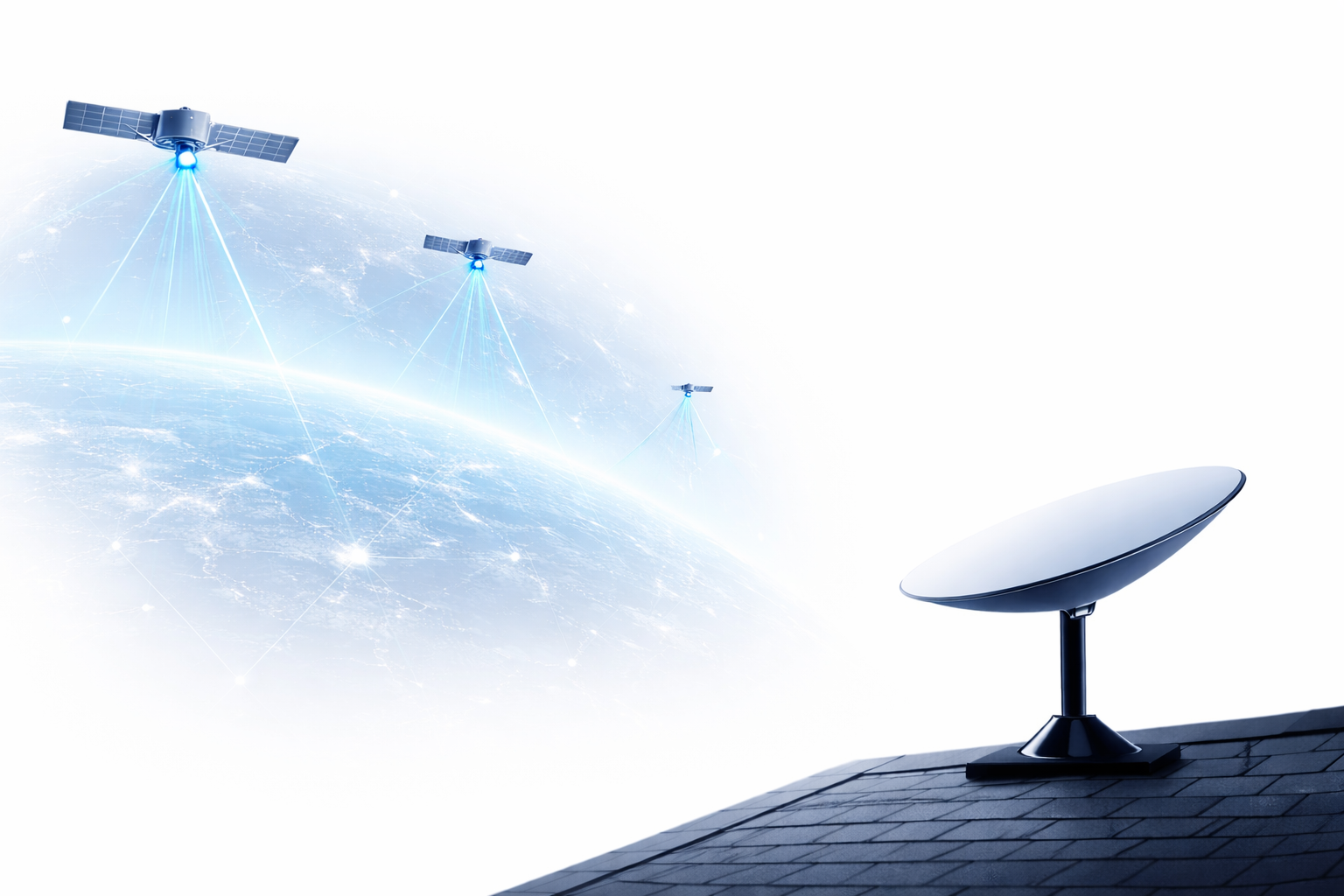
Users install a “Starlink dish” device — a signal transceiver dish placed outdoors.
-
The dish automatically searches for and tracks the nearest Starlink satellite in the sky.
-
This device transmits and receives radio waves with satellites, helping to connect high-speed wireless internet.
3.2 Data transmission between satellites
-
Starlink uses optical laser link technology between satellites (inter-satellite links).
-
Laser links transmit high-speed data directly between satellites, reducing latency and increasing bandwidth.
-
Allows data to be transmitted to the destination quickly without having to constantly return to ground stations.
3.3 Acts as a ground station
-
Satellites connect with ground stations to transfer data to the internet network.
-
Ground stations receive and send data via fiber optic cables to internet access points.
-
The system ensures stable data flow, low latency, and high access speed for end users.
4. User equipment and supporting technology

4.1 Starlink Dish (User Terminal)
-
Compact design, automatically rotates and tilts according to satellite position.
-
Integrated electronic phased array antenna, allowing for quick and accurate wave direction adjustment.
-
Capable of automatically finding new satellites when the current satellite moves out of coverage.
4.2 Router and internal network
-
The router broadcasts Wi-Fi within the home or usage area.
-
Supports multi-device connection at high speed, ensuring a smooth experience.
4.3 Management software and applications
-
Users can manage connection status, network performance, and update software via the Starlink app on their phones.
-
The software automatically updates firmware for the dish and satellites to continuously improve performance.
5. Outstanding Advantages of the Starlink System
-
Global coverage: Including remote areas and islands where traditional internet infrastructure is difficult to reach.
-
Low latency: Latency is only about 20–40 ms thanks to low orbit satellites, nearly equivalent to fiber optic internet speed.
-
High speed: Current download speeds average from 100 Mbps to over 300 Mbps, continuously improving.
-
Easy-to-Install Equipment: Users can install the transceiver dish themselves without needing in-depth technical knowledge.
-
Rapid Scalability: The number of satellites can increase to tens of thousands, helping to expand coverage and bandwidth.
6. Current Challenges and Limitations
-
High Investment and Operational Costs: Launching and maintaining thousands of satellites requires enormous capital.
-
Space Debris: A dense satellite network increases the risk of collisions and space pollution.
-
Weather Impact: Rain, snow, and fog can degrade signal quality.
-
Spectrum Management and Legal Issues: International coordination is needed to avoid signal interference and ensure operational safety.
-
Security capability: Protect user data and networks from cyber attacks.
7. Process from orbit to user
-
Satellite launch: Starlink satellites are launched by Falcon 9 rockets into low orbit.
-
Orbital deployment: Satellites automatically position and stabilize their orbit as planned.
-
Network setup: Satellites connect with nearby satellites via laser links.
-
User connection: The transceiver dish continuously tracks the appropriate satellite to maintain connection.
-
Data transmission: Data is transmitted through the satellite network to ground stations and then to the global internet.
-
Management and maintenance: SpaceX controls the orbit, updates software, and handles old satellites and space debris.
8. The future of Starlink and satellite internet networks
-
SpaceX plans to launch tens of thousands of new generation satellites with higher technology, energy efficiency, and superior data transmission capabilities.
-
Develop AI and automation in satellite network management, optimizing bandwidth and reliability.
-
Expand services to industries such as maritime, aviation, and 5G mobile connectivity.
-
Competing projects like OneWeb and Amazon's Kuiper will create a diverse and competitive global satellite internet market.
Conclusion
Starlink marks a significant advancement in satellite internet technology, providing a fast, stable global connectivity solution at a reasonable cost. The low Earth orbit satellite system along with an advanced interconnected network creates a major difference compared to traditional satellites. Although there are still many technical and legal challenges, Starlink is paving the way for a future of unlimited connectivity for humanity.